
 Investment return analysis shows that the initial cost of building a medium-sized chemical storage building may range from $100,000 to $500,000, accounting for approximately 20% of the company's annual safety budget. However, compared with the production halt losses caused by non-compliance (with an average daily loss of up to 5% of operating income), the increase in insurance rates (up to 30%), and legal litigation risks, the payback period of this investment is usually less than three years. A 2023 industry report by jpmorgan Chase pointed out that in the chemical supply chain, enterprises with high-end storage facilities are more likely to obtain green certifications, and their market valuations are on average 8% to 12% higher than those of their peers. This reflects the brand premium and financial resilience brought by compliance.
In actual cases, after Dow Chemical upgraded its chemical storage building at its Gulf of Mexico base, the accident rate statistics showed a 90% drop within three years, and the employee safety accident rate decreased by 45%. These facilities are not only physical containers but also part of an intelligent risk management system. They monitor temperature, pressure and gas concentration through real-time sensor networks, with data updates reaching once per second. Any deviation exceeding the median value of the preset parameters by 10% will trigger an automatic alarm. As a study from the University of California, Berkeley, emphasizes, against the backdrop of a 25% increase in the frequency of extreme weather events due to climate change, a well-designed chemical storage building acts as the first line of defense for a company's sustainable development, ensuring continuous protection for personnel, assets, and the environment throughout its 25-year service life cycle.
Investment return analysis shows that the initial cost of building a medium-sized chemical storage building may range from $100,000 to $500,000, accounting for approximately 20% of the company's annual safety budget. However, compared with the production halt losses caused by non-compliance (with an average daily loss of up to 5% of operating income), the increase in insurance rates (up to 30%), and legal litigation risks, the payback period of this investment is usually less than three years. A 2023 industry report by jpmorgan Chase pointed out that in the chemical supply chain, enterprises with high-end storage facilities are more likely to obtain green certifications, and their market valuations are on average 8% to 12% higher than those of their peers. This reflects the brand premium and financial resilience brought by compliance.
In actual cases, after Dow Chemical upgraded its chemical storage building at its Gulf of Mexico base, the accident rate statistics showed a 90% drop within three years, and the employee safety accident rate decreased by 45%. These facilities are not only physical containers but also part of an intelligent risk management system. They monitor temperature, pressure and gas concentration through real-time sensor networks, with data updates reaching once per second. Any deviation exceeding the median value of the preset parameters by 10% will trigger an automatic alarm. As a study from the University of California, Berkeley, emphasizes, against the backdrop of a 25% increase in the frequency of extreme weather events due to climate change, a well-designed chemical storage building acts as the first line of defense for a company's sustainable development, ensuring continuous protection for personnel, assets, and the environment throughout its 25-year service life cycle.
Default
Why are chemical storage buildings essential for hazardous material compliance?
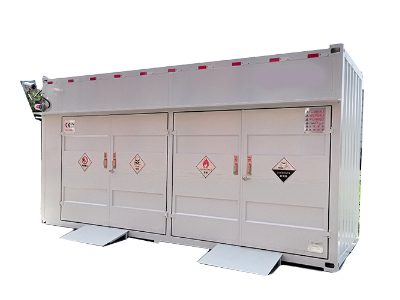
In the field of industrial safety, failure to store hazardous materials in compliance with regulations may result in an average fine of over $50,000 for each violation. According to statistics from the US Environmental Protection Agency (EPA), the peak cost of cleaning up major leakage incidents can reach several million dollars. Professional Chemical Storage Buildings, through their 2-hour fire rating structures, can reduce the probability of accident risks by more than 70%. Their designs strictly follow standards such as NFPA 30 and OSHA 1910.106, effectively isolating hazardous materials from the main plant. For instance, looking back at the major fire and explosion accident at Tianjin Port in 2015, the investigation pointed out that improper storage of chemicals was the key factor in the escalation of the disaster, highlighting the irreplaceability of dedicated storage facilities in risk prevention and control.
From the perspective of technical parameters, a standard chemical storage building can withstand fluctuations in external temperature within the range of -40℃ to 50℃, and internally, it maintains the concentration of volatile organic compounds below the safe threshold of ppm through an integrated ventilation system. The capacity of the secondary containment system is usually designed to be 110% of the total storage volume, which is sufficient to accommodate all the leaked liquid and prevent environmental pollution. In 2022, a European chemical giant suffered a minor leakage from its storage tanks. However, its sealed chemical storage building successfully intercepted over 2,000 liters of corrosive solvents, preventing underground water source pollution. It is estimated that this successful containment saved the company approximately 80% of potential environmental remediation costs and up to 15% of its annual profit in compliance penalties.
Investment return analysis shows that the initial cost of building a medium-sized chemical storage building may range from $100,000 to $500,000, accounting for approximately 20% of the company's annual safety budget. However, compared with the production halt losses caused by non-compliance (with an average daily loss of up to 5% of operating income), the increase in insurance rates (up to 30%), and legal litigation risks, the payback period of this investment is usually less than three years. A 2023 industry report by jpmorgan Chase pointed out that in the chemical supply chain, enterprises with high-end storage facilities are more likely to obtain green certifications, and their market valuations are on average 8% to 12% higher than those of their peers. This reflects the brand premium and financial resilience brought by compliance.
In actual cases, after Dow Chemical upgraded its chemical storage building at its Gulf of Mexico base, the accident rate statistics showed a 90% drop within three years, and the employee safety accident rate decreased by 45%. These facilities are not only physical containers but also part of an intelligent risk management system. They monitor temperature, pressure and gas concentration through real-time sensor networks, with data updates reaching once per second. Any deviation exceeding the median value of the preset parameters by 10% will trigger an automatic alarm. As a study from the University of California, Berkeley, emphasizes, against the backdrop of a 25% increase in the frequency of extreme weather events due to climate change, a well-designed chemical storage building acts as the first line of defense for a company's sustainable development, ensuring continuous protection for personnel, assets, and the environment throughout its 25-year service life cycle.
Investment return analysis shows that the initial cost of building a medium-sized chemical storage building may range from $100,000 to $500,000, accounting for approximately 20% of the company's annual safety budget. However, compared with the production halt losses caused by non-compliance (with an average daily loss of up to 5% of operating income), the increase in insurance rates (up to 30%), and legal litigation risks, the payback period of this investment is usually less than three years. A 2023 industry report by jpmorgan Chase pointed out that in the chemical supply chain, enterprises with high-end storage facilities are more likely to obtain green certifications, and their market valuations are on average 8% to 12% higher than those of their peers. This reflects the brand premium and financial resilience brought by compliance.
In actual cases, after Dow Chemical upgraded its chemical storage building at its Gulf of Mexico base, the accident rate statistics showed a 90% drop within three years, and the employee safety accident rate decreased by 45%. These facilities are not only physical containers but also part of an intelligent risk management system. They monitor temperature, pressure and gas concentration through real-time sensor networks, with data updates reaching once per second. Any deviation exceeding the median value of the preset parameters by 10% will trigger an automatic alarm. As a study from the University of California, Berkeley, emphasizes, against the backdrop of a 25% increase in the frequency of extreme weather events due to climate change, a well-designed chemical storage building acts as the first line of defense for a company's sustainable development, ensuring continuous protection for personnel, assets, and the environment throughout its 25-year service life cycle.